
Last Updated on November 3, 2026
Connecting to a UK VPN server should, in theory, be straightforward and for many years it was just that. We know your internet traffic travels through the VPN, websites see the British IP address, and any service restricted for UK users should recognise you as being in the country.
Except it doesn’t always work that way, at least not now.
BBC iPlayer and other streaming platforms can now identify many VPN connections, even when the IP address appears to be in the correct country. The explanation has less to do with where the server is located and more to do with how streaming services identify the networks connecting to them. They’ve not cracked geo-blocking simply learnt how to detect VPN servers.
The problem with shared IP addresses
When you connect to most commercial VPNs, you’re usually sharing its public IP address with other customers. Hundreds or potentially thousands of connections may appear to originate from the same address. Indeed, the cheaper and better value the VPN service is – the more people you’re probably sharing with. It’s the easiest way to bring down the prices and charge less – sharing hardware. This arrangement is perfectly normal – almost all teh VPN services do this. It’s one way VPN providers accommodate large numbers of customers without needing a separate public IP address for everyone.
For the majority of sites and situations it doesn’t really matter, but it does create a problem for streaming. One of the problems is that an IP address doesn’t merely provide an indication of geographical location. It can also reveal information about the organisation operating the network. Commercial databases can identify addresses associated with hosting companies, data centres and known VPN services. Streaming providers can use this information when deciding whether to accept a connection.
Consequently, an IP address might be correctly identified as British which is good for UK only sites but also being recognised as belonging to a commercial VPN provider. This is why repeatedly switching between UK servers sometimes achieves very little. You may obtain a different IP address, but that address could be just as recognisable as the previous one.
Why DNS matters
There is another part of the connection that receives much less attention: DNS, or the Domain Name System. Whenever you enter a website address into a browser, your computer needs to determine the IP address associated with that website. Ordinarily, a DNS server responds with a publicly accessible address belonging to the website or its content delivery network.
Some VPN providers, however, use DNS to handle particular streaming connections differently. NordVPN for example calls its integrated streaming technology SmartPlay. It combines conventional VPN functionality with SmartDNS technology, operating automatically when users connect through the NordVPN application.
The more revealing details come from independent technical research. A 2022 investigation by Kingsmead Security, published by GeoComply, examined how commercial VPN providers direct streaming traffic through specialised proxy infrastructure.
The Dutch researchers found that some providers could return different DNS addresses for selected streaming domains, allowing those connections to be handled separately from ordinary web traffic. This potentially gives a VPN provider much more flexibility over both how they handle authentication and the public IP addresses which are presented to streaming services.
What happens in practice?
So, we recently tested NordVPN’s DNS behaviour using several UK servers. Without an active VPN connection, when we did a simple DNS query for the BBC website it returned ordinary public BBC addresses. With NordVPN connected, (and allowing it to resolve the DNS addresses) the same website resolved to a rather unusual address:
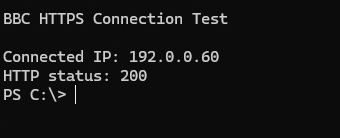
This belongs to a special-purpose IP address range rather than being a conventional publicly routed BBC address. We then established a successful HTTPS connection using that address.
The result is consistent with the DNS-based forwarding arrangements described in earlier academic research, although it doesn’t reveal the exact route taken through NordVPN’s current infrastructure.
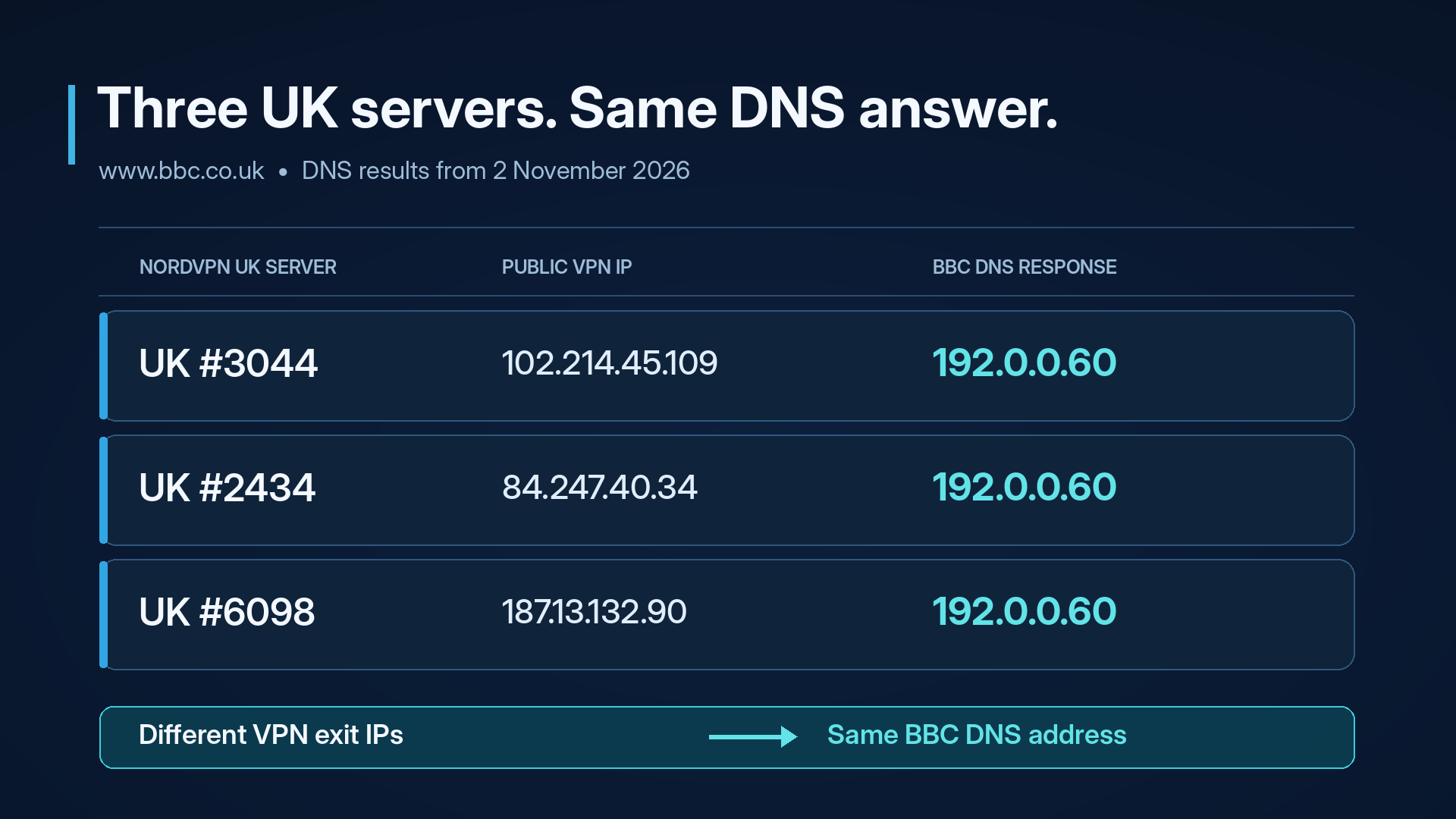
We also tested three different UK VPN servers. Despite having different public IP addresses, all three returned the same special address for the BBC website.
That suggests the system is using consistent internal addressing independently of the particular VPN server selected.
Does that mean BBC iPlayer will always work?
No. Streaming providers continually update their detection methods, and a successful website connection doesn’t guarantee video playback.
Our short BBC iPlayer playback test worked while connected to NordVPN from within the UK. That demonstrated compatibility with the tested connection, not guaranteed access from another country. For a clearer explanation of the technology, including diagrams, actual DNS results and a practical BBC iPlayer demonstration, we’ve put together a video:
Watch: How NordVPN Works With BBC iPlayer — SmartPlay Explained
The important distinction is that modern streaming VPN technology can involve substantially more than selecting a server in the right country.
Behind that simple Connect button, DNS responses, specialised forwarding systems and different network endpoints may all influence how a streaming service sees your connection.
And that helps explain why two VPN connections with apparently valid UK addresses can produce very different results.